
Several years ago I was working with a couple who were first-time home buyers. The market was strongly favoring sellers at the time, and they unfortunately missed out on several listings. In every instance the final sales price escalated above their budget.
We then found a townhouse in Fairfax near the Vienna Metro station that had been completely renovated, and after touring it they were very excited about submitting an offer. We did -- on Christmas Day, no less!
Included in their offer was a home inspection contingency and these typically need to be conducted within 3-5 days of a ratified contract. (A ratified contract is when all parties agree to all of the terms that are in a contract which they then sign.)
The three of us were present for the home inspection, and I noticed the inspector began finding things that were a bit puzzling to him -- doors that wouldn't easily open and tiles that were popping off a shower wall in an upstairs bathroom.
The home inspector soon realized that when the main level was opened up, which created a popular "open concept" floor plan, a load-bearing wall had been removed. As a result, the lack of this supporting wall was causing stress on the remaining walls. In essence, they were slightly caving in. . .
The contractor had done the renovation without pulling any permits. If he had, he never would have been given permission to remove the load-bearing wall. If the building permit process had been followed, the townhouse would never have passed that County inspection.
Luckily, my clients had a home inspection contingency and were able to get out of the contract.
By the way, a buyer can get out of a ratified contract even if the reason isn't as egregious as this. They just need to have the home inspection done within the allotted timeframe, have the inspection done by a licensed inspector, and notify the seller by the specified date.
We soon found another listing where they now live to this day -- three children later!
Final note: even though I experienced this situation first-hand, there are times when I don't think a home inspection is absolutely necessary. Or, there are other ways to handle a home inspection that don't follow a "traditional" path. I'll be glad to discuss if you're ever interested.




JaneEllen McLaughlin Saums
Compassionate & Trustworthy Always
REALTOR® Licensed in VA, DC, MD
c. 703.861.3523 | o. 703.738.9557
janeelle.saums@corcoranmce.com
janeellensells.com
Over 20 years ago my family and I were living in a small, single-family Cape Cod in McLean. It had been built in post-war 1954, and was considered to have 1.5 stories since the upper floor had angled side walls that tucked directly under the rafters. The neighborhood, like many others in the area, was built to accommodate returning veterans and federal government workers moving to the nation's capital, so the homes were very modest and usually only the main floor had been finished by the developer.
Our family easily out-grew this small brick house which was purchased from the original owner. We eventually learned there seemed to have been an aversion for purposeful updates and cohesive repairs over the years he owned it. For example, the shower stall in the main bathroom was "tiled" with plastic tiles that were installed without grout. This meant that the walls weren't waterproof and thus, no one could take a shower there. Also, the original stove was replaced by one that was about 6" narrower, and as a result there was a huge gap between the stove and the accompanying kitchen counter. With these and other "updates" throughout the two main floors we decided to have the house not only enlarged but renovated.
It's important to note that during this time is was extremely difficult to find a contractor -- let alone find one who would answer their phone. But, we eventually found one through the recommendation of a friend. We even toured the friend's house and were impressed by the work that had been done there.
The plans for our new home were ambitious and involved the following: we decided to add a totally new primary bathroom and completely renovate another full bathroom. (The one with the plastic tiles.) In addition, the dining room and three bedrooms were enlarged, closets added, new windows and doors installed, the roof was raised, and the small kitchen was gutted so that it would eventually double in size. In order to do all of this the back of the house was removed and the second floor was completely gutted in time for the Thanksgiving holidays.
With most of the first floor in disrepair and the second non-existent, we moved the food prep to the small basement where the workshop served as our new kitchen. We did the dishes in the laundry sink, cooked using an electric frying pan on top of the washing machine, and prepared meals on the workbench. There was also a microwave and toaster oven but no stove nor oven, so we spent the Thanksgiving holidays in a hotel. I remembered the house lacked an oven one hectic day after I grabbed a pizza at Costco ( an easy meal for a family!) and had to sheepishly call a neighbor and ask if I could bake it using her oven.
With our house in total disarray, the contractor then stopped answering our phone calls and he eventually just disappeared. Keep in mind, this was before social media was prevalent and before posts, ratings and comments could make or break a business. The contractor also took off with a substantial downpayment we had given him. I don't think this could ever happen in today's world, but back then there was little recourse other than the legal route, and we decided that hiring a lawyer was risky since there wasn't any guarantee we'd get any of the money back. We already had a laundry list of things to do and didn't have time for a lawsuit.
As the right-hand assistant we met every morning and decided what needed to be done that day -- and in what order. We discussed everything from where to locate intake vents to how many and what type of lights to have in a room (pendant, ceiling, recessed . . . ), light switches (two-way or three-way and where in the room or hallway or in the room and hallway to put them), sink placement (at an angle but can the dishwasher door then be opened?), bathroom layout (if the shower door opens here where does the toilet go?), how a door opens (inwards or outwards, door knob on the left or right?), etc., etc., etc. Everything was discussed. Every. Single. Detail! I also ran errands and became well-aquainted with every hardware store within a 10-mile radius as I purchased supplies and served as a delivery service.
I mention this because I now see the silver lining to this trying and stressful situation and how something good has eventually come from it. Because I was so involved in the expansion and renovation of our home I have a pretty good idea of what needs to be done regarding home renovations and repairs. This, in turn, has helped me immensely as I've helped my clients navigate major repairs and renovations themselves.
I'm also fortunate that over the years I've been able to find and work with great contractors and trades people. In fact, I've gotten to know them so well that I know when a project is too big or too small for their business or if it fits their range of capabilities. It's always important to find the right fit!

JaneEllen McLaughlin Saums
Compassionate & Trustworthy Always
REALTOR® Licensed in VA, DC, MD
c. 703.861.3523 | o. 703.738.9557
janeelle.saums@corcoranmce.com
janeellensells.com
Several years ago I was working with a first-time home buyer who was looking extensively at condos in DC. She eventually found one in McLean Gardens which is a historic residential community in upper Northwest.
The condo was really cute and had also been renovated, so I was thrilled when her offer had been accepted. The settlement date was listed 30 days from the date of the offer.
About three days before settlement I received a call from her loan officer. He apologized profusely and said that he wasn't able to proceed with the loan! This is what happened:
While doing a title search, the settlement company discovered that a majority of the units in the building were owned by a single company. This is a red flag in the financial world. If that company gets into financial difficulty it ends up affecting all of the other owners in the building. For example, if the company files for bankruptcy, that means all of the units the company owns would be sold at a fire sale thus pulling down the value of the neighboring condos.
Luckily, my buyer had a financing contingency in place. This contingency basically states that if the lender is unable to issue a loan then the buyer can get out of the contract without penalty:
"Buyer may Deliver Notice declaring the Contract Void if Buyer receives a written rejection for the Specified Financing from Lender and Delivers a copy of the written rejection to Seller."
Because of the Financing Contingency, my client was able to get her earnest money deposit (EMD) back in-full. Phew!
Financing can also fall through for other reasons, for example, if there's a change in the buyer's employment, and they lose their job. There were instances of this during DOGE last year when buyers were under contract and suddenly their jobs were eliminated.
I've never had a Financing Contingency come into play since. But, I have had several clients waive using one when they've been in competitive situations. When they choose to waive the contingency I always discuss the ramifications with them because there's always a slight chance that it might be needed.
JaneEllen McLaughlin Saums
Compassionate & Trustworthy Always
REALTOR® Licensed in VA, DC, MD
c. 703.861.3523 | o. 703.738.9557
janeelle.saums@corcoranmce.com
janeellensells.com
- Their property included a house and 12 acres, but six of the acres had been sold the previous year with another brokerage.
- The house had a driveway over 1/3 mile long, and it was on a septic system and well – no public utilities were available.
- The house and remaining six acres had been on the market for 18 months(!), and there had been no offers. Nada. Not one.
- First, the land couldn’t be developed. In fact, developers weren’t interested. Why? When the first six acres were sold by the first brokerage, the new boundaries essentially land-locked the house. So, an easement was created in order for the owners to have a driveway with access to a public road. Unfortunately, the easement for the driveway was for a private residence – not for a development.
- Just as important, the feasibility of building even a second house on the lot was slim. The lot was very hilly, heavily wooded, bordered by a stream, and was long and very narrow. There was no guarantee that a second house, second well, second septic field, and extended driveway could be placed on the property and also have the necessary setbacks. Therefore, this was another major reason developers weren’t interested in the property -- they simply couldn't build on it.
- Understandably, the real estate taxes for the six acres were considerably higher than listings with a similar-sized house due to the acerage. And this was a huge issue to potential buyers.
- Buyers didn’t view the long driveway favorably – instead of an asset it was viewed as a liability due to the cost of its upkeep and the potential for getting snowed in during the winter.
- Although the house had been lovingly cared for, the kitchen and bathrooms were at least 25-30 years old and needed to be renovated in order to compete with similar listings. At the time of the sale, a house renovation would have cost at least $200,000.
- Fairfax County has many stream valleys and parks that offer extensive green space. Many homeowners can live right next to them and benefit from living in an area with a “country feel” without having to be responsible for the land or pay the real estate taxes. Why buy 6 acres when you can live next to 20 and don't have to be responsible for them?
JaneEllen McLaughlin Saums
Compassionate & Trustworthy Always
REALTOR® Licensed in VA, DC, MD
c. 703.861.3523 | o. 703.738.9557
janeelle.saums@corcoranmce.com
janeellensells.com
Preparing a home for sale can seem overwhelming, especially if the owners have lived in their home for many years and their family lives out of town. Where to start the process? What needs to be done and in what order?
A Senior Real Estate Specialist is a Realtor® who has specialized training working with clients who are over the age of 55. These clients often have special needs, and agents are equipped to work with contractors, move managers, auction houses, estate planners, elder law attorneys, and financial planners in order to meet their clients’ goals.
I earned the SRES designation in 2020, and can offer a full-service approach to selling a home, including:
Touring the home and provide suggestions on ways to improve curb appeal and first impressions in order to obtain the highest price possible.
Creating a customized plan for preparing the home for sale, including dates and a punch list.
Explaining the local market as well as how the seasonal fluctuations, interest rates, and even national events affect real estate sales.
Researching comparable properties and developing an informed pricing strategy for a successful and swift sale.
Obtaining quotes for work that needs to be done and coordinating with the contractors, HOA and condo associations, inspectors, and specialists to get necessary work done.
Coordinating with stagers, photographers, videographers, and marketing professionals to showcase the home in the best light possible using a variety of platforms and methods.
Evaluating each offer and negotiating the best terms and sales price while keeping in close touch well after settlement.
Hiring a Realtor® with the SRES designation is like hiring a whole team of professionals!
I love working with my clients and am honored to be involved in one of their most important financial transactions. I’m absolutely dedicated to my clients and to guiding them through the entire process which I make as seamless and stress-free as possible.
JaneEllen McLaughlin Saums
Compassionate & Trustworthy Always
REALTOR® Licensed in VA, DC, MD
c. 703.861.3523 | o. 703.738.9557
janeelle.saums@corcoranmce.com
janeellensells.com
When making a purchase for your home -- especially a large one -- check on:
- What is the life span?
- Does it have certifications?
- Is it locally sourced and is it healthy?
Everything in your home has a life cycle, so when you need to replace something such as the roof, the HVAC, the hot water heater, or any of the appliances -- first think of replacing them with a “green” choice. That goes for redecorating, too.
- Chose a longer life span – this means it will take longer for your purchase to be replaced and take up space in the landfill. For example, some roofing shingles are guaranteed for 15 years and others for 30. Some water heaters are guaranteed for 6 years and others for 12.
- Look for certifications that show your purchase is water efficient, energy efficient, sourced sustainably, or healthier.
Third-party certifications include WaterSense, Energy Star, cradle to cradle, Green Seal, and FSC (Forest Stewardship Council). - Check to see if the product is locally sourced. This means the energy to transport it is reduced. Plus, it helps local economies.
- Take note if your product is processed with VOCs (volatile organic compounds). These are found in carpeting, paint, and flooring. VOCs are known to cause health problems, so lower VOCs are a better choice for you, your health, and the environment.
Would you like more information about how you can make your home greener so it leaves a smaller footprint? Contact me! 703-861-3523. I'll be glad to discuss it!
JaneEllen McLaughlin Saums
janeelle.saums@corcoranmce.com
703.861.3523
janeellensells.com
Did you know a nicely landscaped home can sell for 10% -12% more than a home that has minimal landscaping? Your front yard makes a huge first impression! Using native plants in the design -- rather than non-natives – is both economical and smart. Because they’ve adapted to the climate and soils, these plants tend to be hardy and need little maintenance or watering once they take root. In addition, yards with native flowers, ferns, shrubs and trees tend to be healthier because chemicals such as fertilizers, insecticides, or herbicides aren’t necessary. But most importantly, native plants are a vital part of the food chain and support birds, pollinators, and butterflies. While non-natives are equivalent to eating junk food, native plants are a nutritious feast for local wildlife.
There are several places in the DMV where you can buy native plants:
Earth Sanga
Springfield, Virginia
703.333.3022
info@earthsanga.org
Nature By Design
Alexandria, Virginia
703.683.GROW
plantfolks@nature-by-design.com
Watermark Woods
Hamilton, Virginia
540-441-7443
Julie@watermarkwoods.com
Chesapeake Natives, Inc.
Upper Marlboro, Maryland
240.997.5185
info@chesapeakenatives.org
There are also periodic plant sales sponsored by local groups such as the Ayr Hill Garden Club, Potowmack Chapter of the Native Plant Society, Prince William Wildflower Society, Walker Nature Center, Clifton Institute, Friends of Riverbend Park, etc.
For more information about native plants in the DMV, check out the Plant NOVA Native website. It’s a good place to start and will provide ideas for enhancing your yard . . . for that important first impression! The Maryland Native Plant Society also has a website filled with lots of information.
If you have questions about boosting the curb appeal of your home or any other changes that can affect its resale value, please feel free to contact me. I’m never too busy for your calls!
JaneEllen McLaughlin Saums
janeelle.saums@corcoranmce.com
703.861.3523
janeellensells.com
It’s not uncommon for a homeowner to ask if solar panels will affect the value of their home. According to a report by Zillow in 2019, solar panels can potentially increase a home’s value by up to 4.1% when compared to similar homes without panels. The report further states this could increase the value of a median-priced home in the U.S. by $9,274.
However, two years later in today’s seller-dominated market where homes can easily get 10% above list price for just having a roof and four walls, this question almost becomes a moot point. But, there are other ways owners with residential solar can see a cost-benefit that can be well-documented.
The direct benefit of solar panels is they reduce a homeowner’s electric bill. Net metering is allowed in Virginia, DC, and Maryland, and it works a bit like a bank account. For example, consider that on sunny days the solar panels will create an excess of electricity which goes back to the grid. This is like putting money in the bank.
However, on overcast days when energy consumption is greater than what the panels provide, the homeowner can tap into the “bank” and “withdraw” energy without having to pay for it. Over the course of 12 months, the electricity production and electricity use essentially equal out. In all three jurisdictions, homeowners still have to pay to connect their solar systems to the grid, so they will still get a bill from their utility. In Virginia, it ranges from $6-$12 a month, and in DC and Maryland, it costs approximately $8 per month, according to Alex Ticu, a solar consultant with Lumina Solar based outside Baltimore.
Through 2022, homeowners who install solar panels will get a 26% tax credit, and panels installed in 2023 will get a 22% tax credit. However, this extension of the solar Investment Tax Credit (ITC) will end in 2023, so homeowners need to plan ahead. “This means you need to have your order in by August,” said Phil Covell with Vellco Solar, a specialist in solar energy, efficiency, and energy procurement based in Virginia. If the panels aren’t installed in 2022 then the tax credit will drop to 22% beginning in January 2023.
Homeowners can get paid for having solar by selling their SRECs (solar renewable energy certificates). What are SRECs? Solar United Neighbors (SUN), a national non-profit that represents solar owners and supporters, states that an SREC “represents the ‘green’ value of your electricity. SRECs are sold separately from the physical electricity that your solar panels produce. . . You earn one SREC for every 1,000 kWh (or 1 MWh) of electricity produced by a solar system.” How does this translate for the average homeowner with solar?
In Virginia, for example, thanks to the Virginia Clean Economy Act of 2019, utilities are now required to provide a certain amount of solar energy a year or else they’ll get fined. One way they can meet these requirements is by purchasing SRECs from Virginia homeowners. Currently, an SREC in Virginia is around $45. So, a modest-sized solar array generating 5.25 MWh per year would earn approximately $236.25 for the homeowner. Over the life of the solar panels (25 years), this could be a savings of $5,906.25.
However, the cost of SRECs varies considerably depending on the jurisdiction. In 2021, SRECs were $77.50 on average in Maryland and in DC they were between a whopping $380 and $435. As you can see, DC has the most robust program and the highest price for SRECs. This is because DC’s Renewable Portfolio Standard (RPS) requires that 100% of the District’s electricity comes from renewable energy by 2032. The goal for Virginia, by contrast, is that only 30 percent of its electric system will be powered by renewable energy resources by 2030. So, the price paid for SRECs is based on supply and demand.
Residents in Fairfax County will get a tax exemption for 5 years using their property tax rate. For example, if the cost of the solar installation was $18,000 and the tax rate is $1.14, then the tax credit per year would be $205.20. ($18,000/100 = $180 x $1.14 = $205.20). Over five years this would be a cost-saving of $1,026.
Residents of Prince George’s and Baltimore counties can receive a $5,000 tax credit while those in Ann Arundel and Hartford counties can receive a $2,500 tax credit according to Ticu with Lumina Solar.
In Maryland, eligible residents can apply for a grant for $1,000 for installed solar systems. Applications will be accepted through June 30, 2022, or until funds have been exhausted. The program is through the Maryland Energy Administration. (https://egov.maryland.gov/mea/CleanEnergy/)
There are indirect cost benefits, as well. Dominion Energy, for example, states it will be raising its rates each year in the near future. According to the State Corporation Commission’s (SCC) Status report (2020), Dominion Energy’s residential customers paid $116.18 in 2020 for 1,000 kWh per month and are projected to pay $171.20 in 2030. That’s an increase of 47% by 2030. Those customers with solar panels will be immune to those rate increases.
Another indirect benefit according to Covell with Vellco Solar is that many jurisdictions in Virginia exempt solar systems from property taxes. Therefore, your property taxes don’t increase just because you’ve added this improvement to your home.
"More and more people are realizing that solar just makes sense.” said Aaron Sutch, Atlantic Southeast Region Director with SUN. “It's a generator with no moving parts, a free source of fuel over 25 years with a virtually maintenance-free lifespan."
If you want to sell your house with solar panels, make sure you have a real estate agent who appreciates their benefits and is knowledgeable about the value the panels bring to your home. Your agent should also be able to translate that information and be able to effectively market the benefits to buyers and their agents. Otherwise, it’s like leaving money on the table.
JaneEllen McLaughlin Saums
janeelle.saums@corcoranmce.com
703.861.3523
janeellensells.com
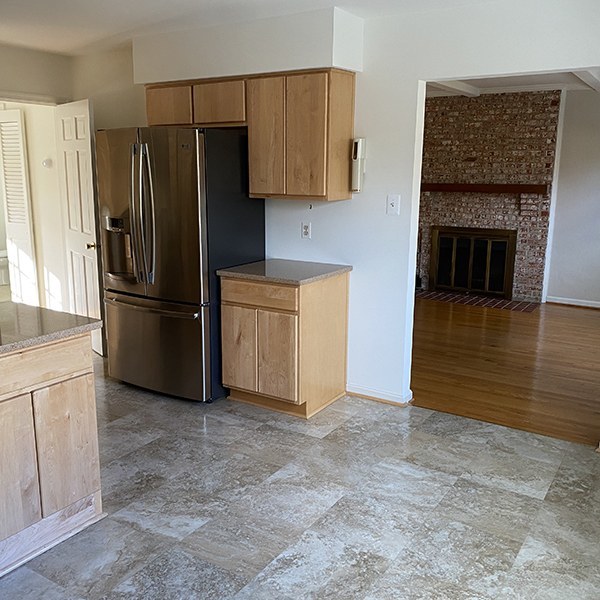
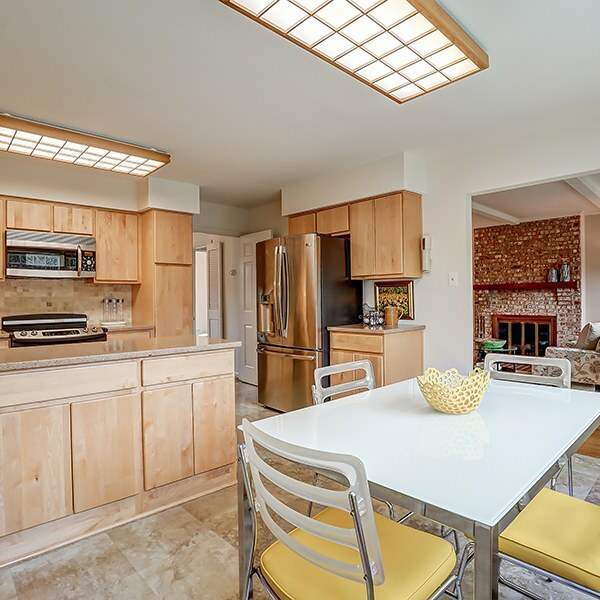
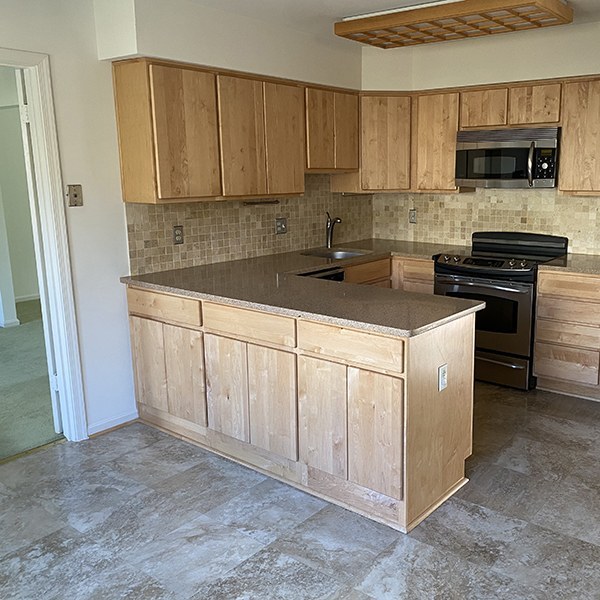
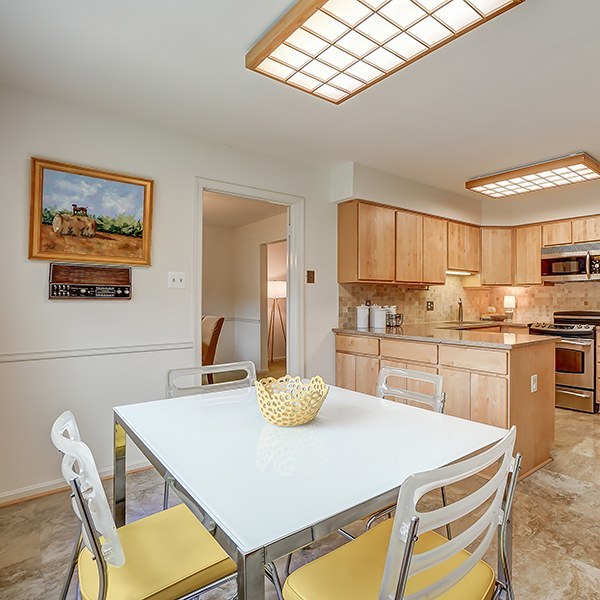
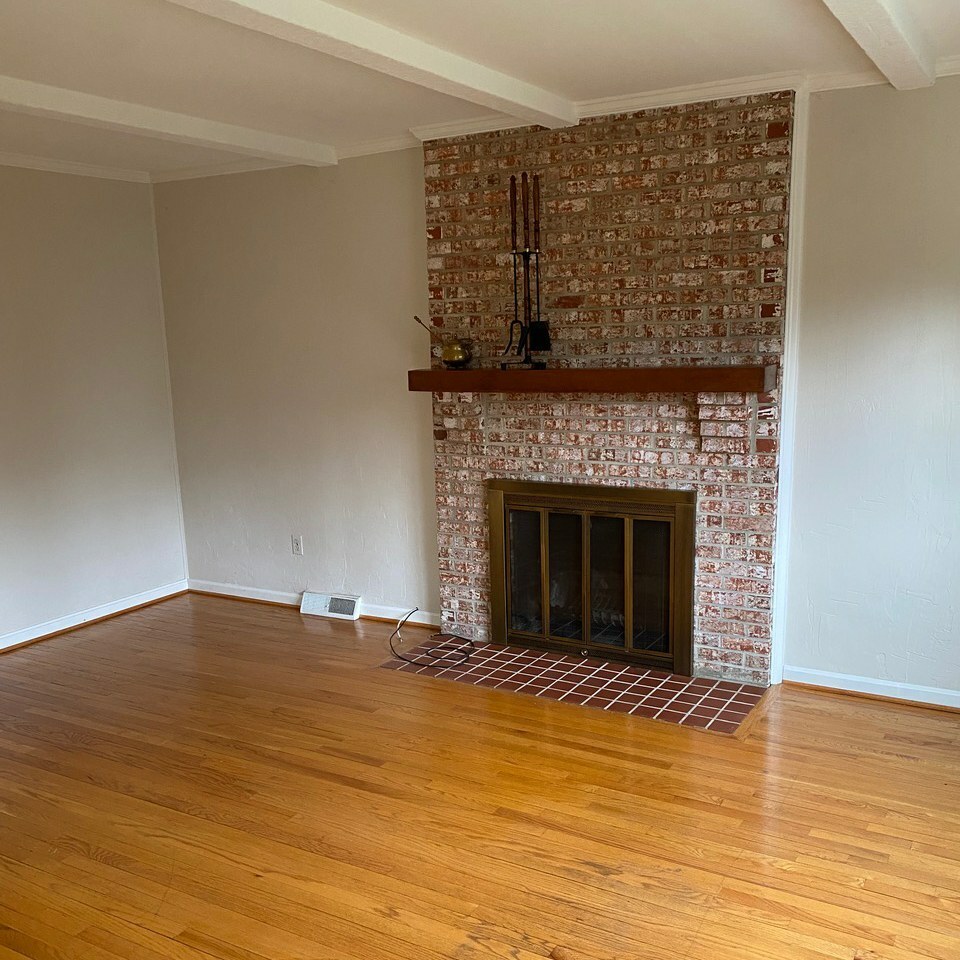
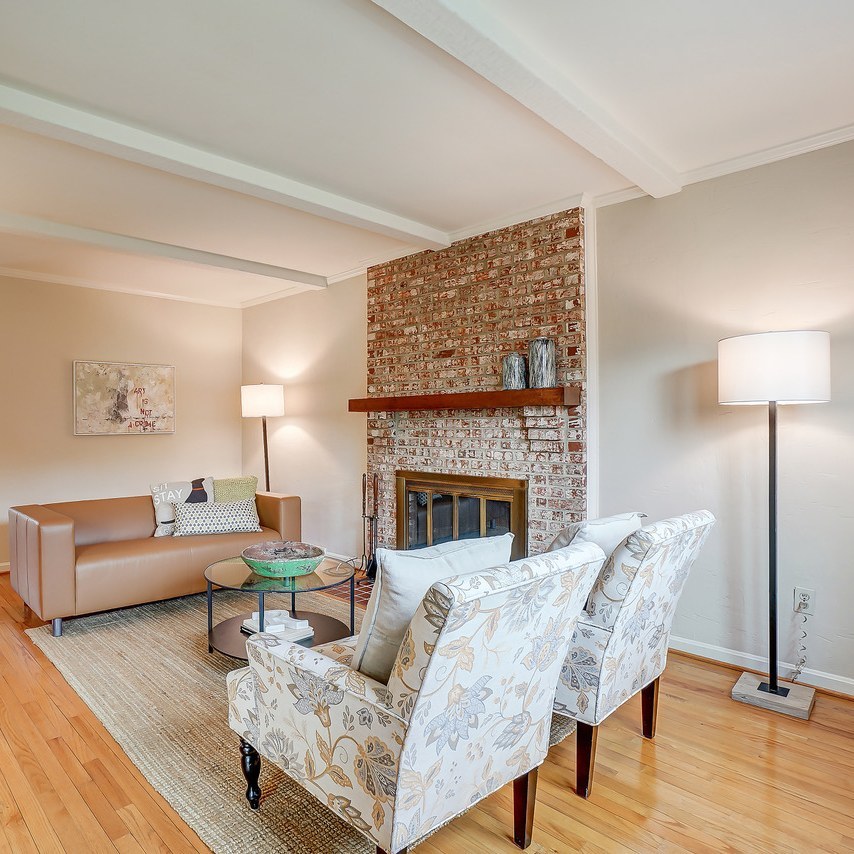
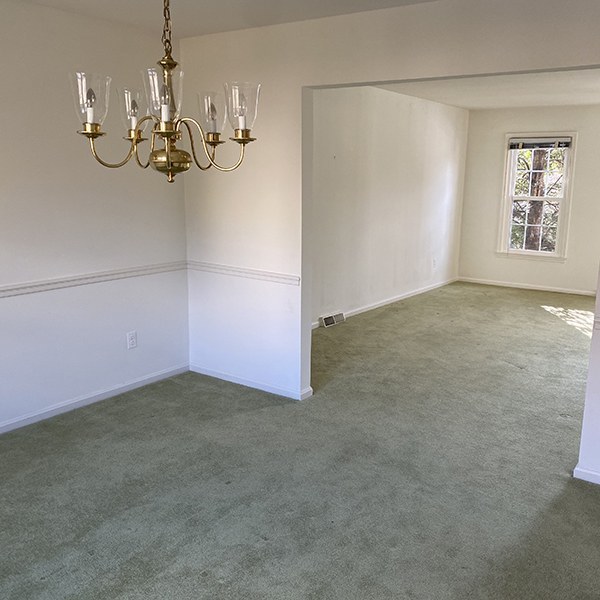
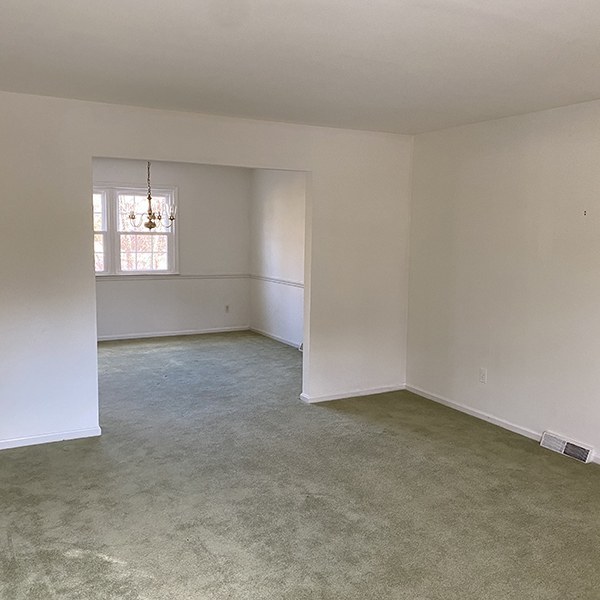
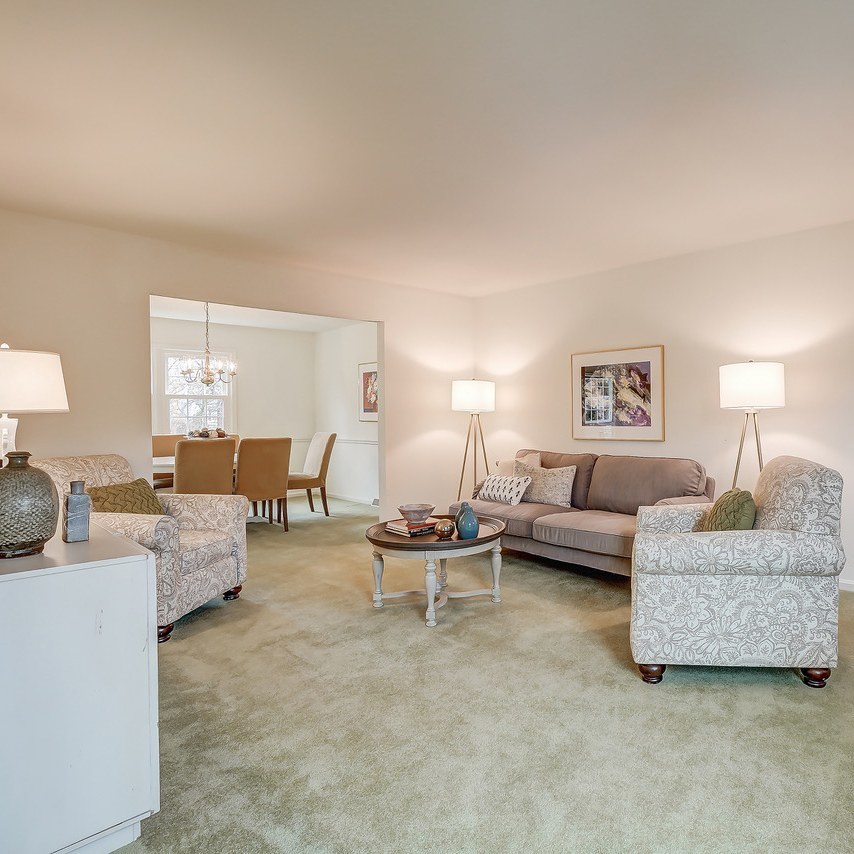
A lot of work can go into preparing a home for sale. It might involve repairs, giving away items, updating rooms or fixtures, and/or addressing work that needs to be done outside. Once this is all finished the thought of also staging the home might seem daunting. However, some agents can help with this, or if a home is vacant the agents may call in a professional stager. Why would you want to have your home staged? First and foremost, a staged home can sell more quickly and for more money than a home that’s not staged. According to a National Association of Realtor’s report, 44% of buyers’ agents reported an increase of one to 10 percent for homes that were staged. For a $500,000 home that’s an increase of $5,000 - $50,000! Plus, the homes often sold more quickly. There are other benefits of staging: buyers can more easily visualize the listing as a future home which can be difficult to do when rooms are empty. Staging can show off a home’s good features and surprisingly, rooms tend to look bigger if they have some furniture in them. Also, according to an NAR report, 97% of today’s buyers use the Internet for their home search. This means that a home needs to look good in photos, and a well-staged home will make the photos look great!
This home at 1761 Creek Crossing in Vienna was listed for $950,000 and sold for $1,063,000. That's an increase of 12%! While many factors were involved, it all began with the presentation of the house and staging was a major factor.
If you would like to discuss how to prepare your home for today’s market, please feel free to give me a call! I’m never too busy for your questions!
Original art by Jane Coonce, Chica Brunsvold, and Sandi Parker with Arlington Artists Alliance
Kitchen
Family Room
Dining Room

Living Room
JaneEllen McLaughlin Saums
janeelle.saums@corcoranmce.com
703.861.3523
janeellensells.com

PARTNERED AFFILIATES





Copyright © Corcoran 2023 – 2026. Corcoran and the Corcoran Logo are trademarks of Corcoran Group LLC. Corcoran Group LLC fully supports the principles of the Fair Housing Act and the Equal Opportunity Act. Each office is independently owned and operated. Any services or products provided by independently owned and operated offices are not provided by, affiliated with, or related to Corcoran Group LLC nor any of its affiliated companies.
© Corcoran McEnearney 2026. All rights reserved. DO NOT SELL MY PERSONAL INFORMATION
PARTNERED AFFILIATES
Copyright © Corcoran 2023 – 2025. Corcoran and the Corcoran Logo are trademarks of Corcoran Group LLC. Corcoran Group LLC fully supports the principles of the Fair Housing Act and the Equal Opportunity Act. Each office is independently owned and operated. Any services or products provided by independently owned and operated offices are not provided by, affiliated with, or related to Corcoran Group LLC nor any of its affiliated companies.
© Corcoran McEnearney 2025. All rights reserved.
DO NOT SELL MY PERSONAL INFORMATION
