
In the September newsletter I wrote about my steep learning curve regarding home renovations. It was a trial-by-fire, building-while-flying, no-where-to-go-but-up situation when a contractor disappeared after gutting our entire upstairs and removed the back of our house. Over the years I've learned there's been a silver lining to this. The experience has served me well on many levels when I work with my clients who need to do extensive repairs or even just a refresh.
After we determined that the contractor had truly walked away, we regrouped. Because I didn't want the rhetorical question, "were you brought up in a barn?" to play out in real time for my kids, it made the most sense for me to become the assistant to our new, wonderfully-skilled, one-man-band contractor who billed us by the hour. My involvement would help move things along and allow him to do the things that he did best.
Most of the days revolved around making a multitude of decisions -- for example, what type of lights to install? what type of finish or color? how far apart to place them? what types of bulbs to use? how many lumens? how many watts? where to locate light switches? how many "ways" ? (this refers to the number of light switch(es) that control a light source), how many switches per wall plate? what type of wall plate? what type of switches? etc. etc. Some days it seemed endless.
Over many months many things happened, but these are a few memory snapshots that stand out:
o One day new siding was being installed on the entire house. This meant the electricity needed to be turned off because the electrical anchor was attached to the old siding. This is the place where the service wires that run from the step-down transformer in the neighborhood are supported to the electrical system in the house. It's important to note that the electric company is responsible for everything up to the entrance cable and the homeowner is responsible for everything from this point into the house. But first, there needs to be an anchor (see diagram).
It was my job to make sure the electricity got turned back on the day the siding was installed. The installation happened on a Friday. It was actually late on a Friday afternoon when it was completed. It's even more important to note that the electric company doesn't perform this service (connecting the service wires to the house) on Saturdays and Sundays. So, if the window was missed on Friday afternoon, we'd be without electricity for the next 65+ hours until the following Monday.
So, in order to get the electricity turned back on I needed to run interference between the siding company and the electric company. Unfortunately, the workman with the siding company didn't fully understand the assignment and didn't include a house anchor on the new siding. Instead, he hung a wrench from the siding. Yes! A wrench! The technician from the electric company arrived to make the connection and wasn't amused -- nor would he install an anchor for me -- it wasn't his job. In a panic I was able to reach another contractor who immediately came over and saved the day. Thus, we didn't have to face the weekend without any electricity and all that entailed.
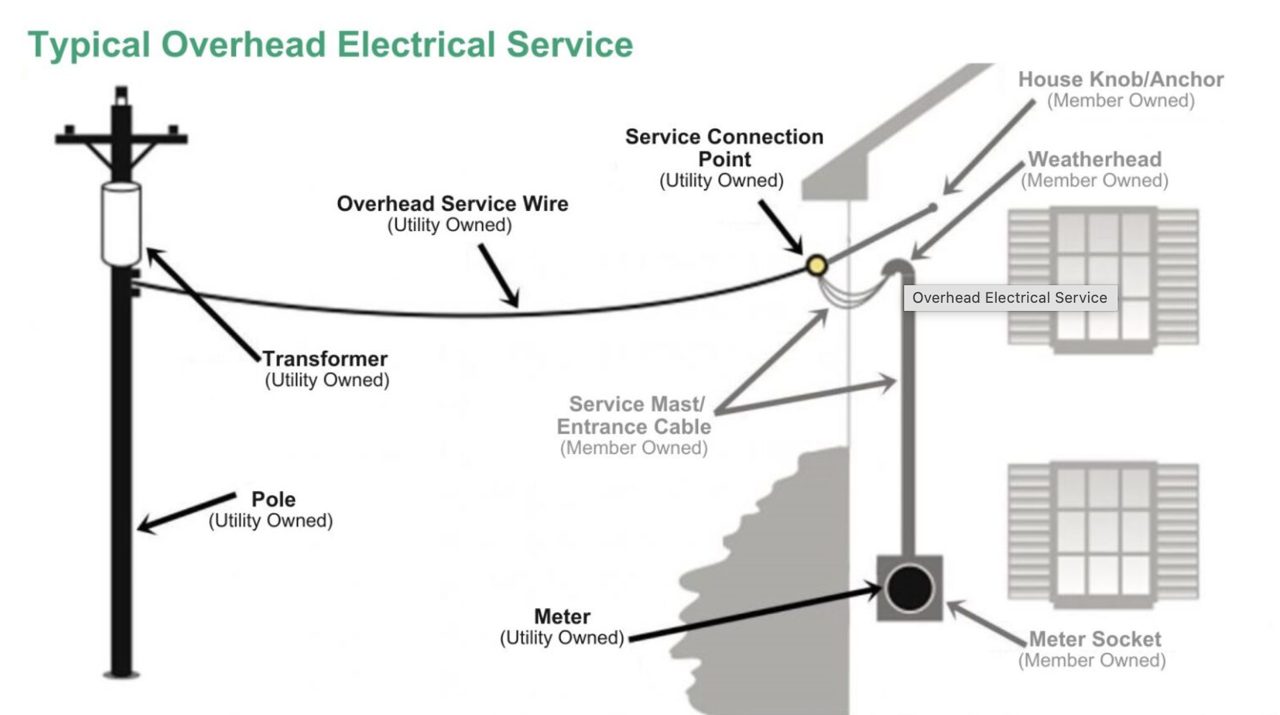
o Another time, after the second floor was completely gutted and we were heading into winter, a workman noted there were pipes to a former upstairs bathroom that were completely exposed in the unheated space. This is when I learned that if you place just a small heat source, such as a light bulb, next to a pipe, you'll help prevent it from freezing and thus bursting. This tip has served me well in other situations.
o When the project was nearing its end, it was time to order over a dozen doors -- doors for bedrooms, bathrooms, closets, double-closets, replacement doors, etc. At the time, the only place to order well-priced, solid-core, six-panel doors was from a company in a neighboring town. It supplied mostly contractors and as a result, they didn't deliver. Since our contractor worked by the hour I made trips all day to the company placing a few doors at a time in the back of my van. That's all that would fit due to the shape of the liftgate. It was about a 45 minute trip one-way, so the majority of the day involved driving back to the business to pick up another load then hauling the doors back to our house, unloading them, and then starting over again.
There's a lot that goes into contracting that's not always obvious on the surface. Coordinating schedules, working around the weather, and disrupted supply chains all affect how quickly a project can get done. I've found it extremely helpful to understand the process so I can help my clients when they need to hire contractors to do work in their own homes.




JaneEllen McLaughlin Saums
Compassionate & Trustworthy Always
REALTOR® Licensed in VA, DC, MD
c. 703.861.3523 | o. 703.738.9557
janeelle.saums@corcoranmce.com
janeellensells.com

PARTNERED AFFILIATES





Copyright © Corcoran 2023 – 2026. Corcoran and the Corcoran Logo are trademarks of Corcoran Group LLC. Corcoran Group LLC fully supports the principles of the Fair Housing Act and the Equal Opportunity Act. Each office is independently owned and operated. Any services or products provided by independently owned and operated offices are not provided by, affiliated with, or related to Corcoran Group LLC nor any of its affiliated companies.
© Corcoran McEnearney 2026. All rights reserved. DO NOT SELL MY PERSONAL INFORMATION
PARTNERED AFFILIATES
Copyright © Corcoran 2023 – 2025. Corcoran and the Corcoran Logo are trademarks of Corcoran Group LLC. Corcoran Group LLC fully supports the principles of the Fair Housing Act and the Equal Opportunity Act. Each office is independently owned and operated. Any services or products provided by independently owned and operated offices are not provided by, affiliated with, or related to Corcoran Group LLC nor any of its affiliated companies.
© Corcoran McEnearney 2025. All rights reserved.
DO NOT SELL MY PERSONAL INFORMATION
